
The optimal content post length that is SEO beneficial is 1500 words (average). Shoot for an average of 1500 words in your original content article posts. Top ranked Google content contains roughly 1500 words. Aim for that word count if you want to attract backlinks (also known as “inbound links”, “incoming links” or “one way links”) and rank your website content.
Category: digital marketing
Can Your Website Monetize in 2022?
You can monetize your website in several ways. You can place ads, write sponsored content and get backlinks to your blog or website for paid articles.
If your interested in monetizing your website, do the math first.
- What’s the revenue per visit? (RPM)
- What’s the cost of getting a visit?
- Is there a viral co-efficient?
- What’s the cost of a visitor?
- Are there members/users?
- What’s the permission base and how is it changing?
Ways to monetize a website include “Affiliate” marketing, Selling Ad Space, Google AdSense, Online webinars or online video courses, sell digital products, create a membership-based or subscription website. To give you some benchmarks, a site that gets 1,000 ad clicks daily would earn about $450 per month. On the other hand, a site that uses affiliate marketing and has memberships/subscriptions can earn several thousand per month.
How to Measure (ROI) Social Media Campaigns in 2022

Before starting any Social Media effort you must DEFINE your goals and targets (KPIs). A lot of these KPIs you can track from a CRM like HootSuite, HubSpot, Salesforce, or Sprout Social.
Basic Social Media Campaign KPI’s (Tangible) measurements:
- Product sales or qualified leads. New customers acquired. Not included: “converted leads” which are the responsibility of the sales organization or account manager.
- Increased revenue, and/or market share.
- Content Post CTR (Click-through rate) through Social Media platform.
- Site traffic (clicks back to website from a Social platform) or “sessions” by Social Media source
These are just a few basic metrics that you can use to measure your Social Media campaigns. So how do you measure the ever important “non-tangible” Social Media ROI?
- The quality of “buzz” or change in sentiment. Think Twitter buzz or the quality/quantity of blog feedback/comments. Develop an in-house engagement metric.
- Amount of relevant people handling digital content.
- Amount of “followers” or new members after a social media campaign. Not everyone’s social media goals is to sell product. Could be a branding goal or a service type goal.
- ReTweets
- Impressions
- Likes
- Connections
In the end, Social Media campaign goals must lead to increased revenue, SEO rankings (Google, and Bing are using “social signals” to help them rank), leads, branding/loyalty, or better service. It’s easy to present the tangible information to your boss or client. Make sure the non-tangible information is measured as well.
Why Small Business (SMB) Needs To Get On Facebook in 2021
If you are a small business (SMB) and you don’t have a Facebook business page, its time to create one as your losing out on possible new customers, leads and clients! Having a Facebook business page makes it easier for people to discover and interact with your brand online. I posted an article way back in 2015 on “Facebook Ad Tips” which I plan on updating soon.
A great article resource on “How to Create a Facebook Business Page in 7 Easy Steps” is over here on Hootsuite.
Below are some compelling statistics on why every small business (SMB) should at least have a basic business page on Facebook.
Facebook has 2.74 billion monthly active users
Facebook is the world’s third-most visited website
Facebook users spend 34 minutes per day using the platform
42% of businesses on Facebook are based in the suburbs
18.3% of U.S. adults made a purchase through Facebook in the last year
⅔ of Facebook users visit a local business Page at least once a week
11 Google Chrome Extensions for Productivity, Experience and Security
Here are latest 11 Google Chrome extensions boosting your productivity, experience and security.
- iCloud Passwords. iCloud Passwords allows you to use the same strong Safari passwords you create on your Apple device, with Chrome on Windows.
- LastPass: Free Password Manager. An award-winning password manager, saves your passwords and gives you secure access from every computer and mobile device.
- Save to Pocket. Pocket’s Chrome extension is the easiest, fastest way to capture articles, videos, and anything else you find on the web.
- HTTPS Everywhere. Encrypt the Web! Automatically use HTTPS security on many sites.
- Adblock Plus. A free extension that allows you to customize and control your web experience. Block annoying ads, disable tracking, block sites known to spread malware and lots more.
- Privacy Badger. A browser add-on that stops advertisers and other third-party trackers from secretly tracking where you go and what pages you look at on the web.
- Print Friendly & PDF. Print Friendly and PDF any Webpage. Print Friendly removes ads, navigation and junk before your print. Pages are optimized for the ultimate print reading experience.
- Pablo. Pablo is the simplest way to create beautiful images that fit every social network perfectly.
- Google Translate. View translations easily as you browse the web. By the Google Translate team. Highlight or right-click on a section of text and click on Translate icon next to it to translate it to your language. Or, to translate the entire page you’re visiting, click the translate icon on the browser toolbar.
- Save to Pocket. Save to Pocket allows you to save articles, Web pages, images and videos for your reading or viewing pleasure. Then it syncs everything across numerous devices, such as your smartphone or tablet.
- Boomerang for Gmail. The ultimate email productivity tool. Send later, track responses, and use AI to write better emails.
Financial Advisors: Use Twitter’s Referral Traffic to Convert Prospects into Clients

Twitter should be part of your firm’s marketing strategy. There are a tremendous number of potential clients out there on Twitter looking for Financial Advisor (advice) help. As social media continues to increase with financial advisor usage – Advisors are using platforms such as Twitter as a powerful tool in increasing traffic back to their respected website.
Twitter is a tremendous source of delivering traffic to your website and hopefully (with the help of a superb website funnel) will convert them into quality leads. Twitter is an attractive channel for Financial Advisors (see statistics below) to not only reach prospective clients, but to nurture relationships with existing clients as well.
-
- Around one-in-five U.S. adults (22%) say they use Twitter
- According to 90% of marketers, their social media (Twitter included) marketing efforts have increased the exposure of their business, and 75% say they’ve increased traffic.
Dedicate a small portion of your day on Twitter promoting your firm’s original content as well as engage with users looking for financial advice. If your busy with current clients and have no time for social media marketing, hire a freelancer that specialized in FINRA & SEC compliant best practices.
Social Media Post Lifespan for 2023

Tweet post lifespan = 15 minutes (Avg.)
Facebook post lifespan = 6 hours
LinkedIn post lifespan = 24 hours
YouTube post lifespan = 20+ days
Make sure you optimize your posts for retweets and shares. You can also try to “boost” a Facebook post with an ad to extend lifespan. With Twitter, “pin” tweets to the top your profile page to guarantee a greater lifespan. For a LinkedIn post, add content to your profile and join groups to share that content there. Add relevant keywords in your YouTube video title, description, & tags.
Lastly, #Hashtags can help extend or “stretch” lifespan for all social media platforms posts.
The Best Time To Publish a Blog Post in 2022
Publishing a blog post really depends on the platform, demographic, and region. There is no blanket “best time” to publish. Ideally, should be published when your target demographic is getting home from work and they start checking their favorite websites as well as checking in on Facebook and Twitter.
Alternatively, another good time to post a blog article and share it on social media is at noon. Visitors will start to creep in and view the post while at lunch when they have free time.
Tuesday is a good day to publish a blog post for social shares (according to OkDork and BuzzSumo). Some quick Twitter and Facebook worst days/times to share your blog article:
- Twitter. Friday after 3PM and any day of the week after 8 PM and before 8AM. Weekends are the worst days to post.
- Facebook. Weekends are the worst days to post.
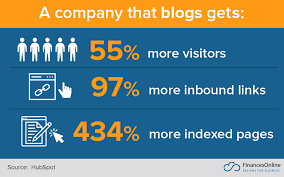
How many blogs per week? To boost organic traffic (from search engines, for example), you should publish 3 to 4 brand new posts per week, each of them fully optimized for search engines (HubSpot).
I encourage everyone to look at the metrics once you get into a posting groove. If one time slot is not getting high click rates, change the posting time a bit until you find that “sweet” spot. Also, if you are located in the time Pacific time zone, and your customers of potential clients are in the Eastern time zone, be aware when scheduling. Always post for your ideal demographic time zone!
9 Real Time Social Media Tracking Tools for 2022

Social Media monitoring is crucial to your marketing campaign. These tools will help your business or service keep track of every conversation, keyword, and hashtag related to your accounts. You can also use the data to look at trends and insights. Will help you “iterate” and dial-in your Social Media marketing efforts.
SocialMention. A social media search and analysis platform that aggregates user-generated content into a single stream. Track and measure what people are saying about you, your company, your product, service or any topic in real-time.
Mention. Listen and make sense of posts across social media. Uncover trends in conversation, filter and analyze data from Twitter, Facebook and Instagram. Pin-point important conversations. Easily monitor sources across the web daily, including press articles, review sites, forums, and blogs.
Google Alerts. Monitor the web for interesting new content. How often. As-it-happens. At most once a day. At most once a week. Sources. Automatic. News. Blogs. Web. Video.
Social Mention. Social media search engine with Real-time social media search and analysis.
Buzzsumo. A tool for content research, and also monitor your Facebook pages. What day is the best to post, how long your posts should be, what types of content works best, and monthly stats over time.
Keyhole. Hashtag Tracking tool to measure your social campaigns in real-time. You can also create reports on-demand.
Unbox Social. All-in-one data-driven influencer marketing platform to discover, evaluate & track campaigns at scale. You can also compare hashtag performance to see how well your brand hashtags are being received by your target audiences.
SparkToro. Instantly discover what your audience reads, watches, listens-to, and follows. Discover the websites, blogs, podcasts, social accounts, and publications that reach your audience.
Financial Advisors: The Basics of Pay Per Click Online Advertising
Pay Per Click (PPC) is one of the many ways of promoting your financial service or business. You only pay when a user/potential customer actually clicks on an ad to visit your website. You pick keywords or phrases such as “shopping” or “Green used car” and when the results come up your ad will be displayed. Google AdWords, and Microsoft Bing Ads are some of the largest PPC network operators. PPC is often used to refer to keyword advertising on search engines and social media website such as Facebook & Twitter. With PPC, search engines & social media platforms can give you instant traffic and allow you to test out new business models and ads in real time.
Getting Started with PPC Online Advertising
To get started, you will need to create a (campaign) simple text ad (or banner ad) that will catch your specific customer or ideal client’s attention. Customer research (demographics) is crucial. The key to online advertising is to think creatively. You need to find specific keywords that are related to your service and/or business. You must word your ad in a way that it manages to attract only that reader who might be interested in your product and/or services. You are actually paying on a per click basis and hence you must only get those visitors who will buy and utilize your product or services. The best way to go about configuring the perfect wording is tweaking the ads that you have created. If your first ad is not working out, try re-wording or adding or deleting a sentence.
Once you start getting results, track your progress in Microsoft Excel or use the PPC tracking results manager that can easily export to CSV file. Most PPC Ad managers have visual front-ends and easy to track success rates. Use one column for keywords, and another for keyword clicks. Back to Excel…Create columns that will represent category phrases. Once you figure out your phrases, think about what local or geography you will sell your product or services. Once you input the data, take out any phrases that are too generic. Start using the keywords that are left in your PPC campaign and then grab the click through rates and conversion data and add the new columns and paste next to that particular keyword. This way you can get a organized visual of what keyword is working and what keyword is not working. Use the Google AdWords Keyword Planner for validating the keywords you’ve found by showing you search volume data and trends, cost per click, and competitive data.
- Understand what makes you special and why people will want to choose your service or product.
- Keep an eye on your competitors’ keywords, messaging, and deals/offers.
- Cater ads to different buyer wants and needs.
- Test price, information that reassures buyers (e.g., “official site,” “24/7 support”), and time sensitivity (e.g., “Offer ends soon”).
You can also choose where you would like to advertise (demographics) such as:
- Geographical location
- Age and gender
- Income levels
- Popular sites
- Blogs
- Your favorite websites
- Day of the week
- Time of day (morning, afternoon, or night)
Don’t have a website but still want to advertise online? No problem. Most PPC networks will allow you to create a “mini” website that your ad will point to. You can add graphics, images, color schemes, and videos to your mini website. Anyone without a website no has no excuse to advertise online. For “brick and mortar” stores, make sure your PPC campaign list the city you are advertising. When your ad is seen, you want to make sure the person surfing notices that your ad is specifically for the area you are advertising for which will increase the quality of your click throughs. Avoid sending the reader of your ad to the home page on the first click. If there’s nothing local about the landing page, the user may abandon the page and move on. Send the reader directly to the product page you are advertising.
What I like about buying keywords on a PPC search engine, Facebook, Twitter is that it provides a trackable medium. Before you start any marketing campaign, you will need to decide what the goal of your marketing medium. If you are just “branding”, then you should know up front to expect to lose money to gain mind share or reinforce your brand.
The advantages to advertising online enables site owners to receive new traffic, new client leads and more measurable ROI. Another advantage include small businesses to be able operate nationally & globally. If your plan is to target the U.S. or the world with your ads, you better have a big budget. Broad PPC campaigns can get very costly in a short amount of time. Instead, begin by targeting the local market you’re familiar with. Your geo-targeted “buyer-persona” ads will cost less, and they will be better aimed at your specific audience. Make sure you localize your keywords. Not only do you have a greater chance to appear in the top SERPs (Search Engine Result Pages), but you have an opportunity to do so much faster than if you were targeting global customers.
 Online Marketing Juice