A cool trick on designing a speech bubble that not many people know

This trick uses a negative space to create a unique and eye-catching shape. Here’s how to do it:

  1. Start with a blank canvas in a graphic design tool like Canva or Adobe Spark or Adobe Express.
  2. Create a rectangle or square shape that will serve as the background for your speech bubble.
  3. Create a second rectangle or square shape that is slightly smaller than the first one and position it inside the first shape.
  4. Create a third rectangle or square shape that is even smaller than the second one and position it inside the second shape.
  5. Use the “subtract” or “minus front” tool to subtract the third shape from the second shape, and then subtract the second shape from the first shape. This will create a speech bubble shape with a unique negative space cutout.
  6. Add your text or image inside the speech bubble.

By using negative space to create a speech bubble, you can create a design that is both unique and visually appealing. This technique can be used to create speech bubbles of different shapes and sizes, and can be customized with different colors and fonts to match your branding or message.

Unleash the Power of Influence: The Ultimate Guide to Becoming a Social Media Superstar!

Becoming a social media influencer can be a rewarding and exciting career path, allowing you to share your passions and interests with a large audience while also potentially earning money through sponsored content and collaborations. However, the path to success as an influencer can be challenging and requires a combination of strategic planning, hard work, and patience.

Step 1: Choose a niche
The first step in becoming a successful influencer is to choose a niche or area of focus. This could be a particular hobby or interest, such as beauty, fashion, or travel, or a specific demographic, such as parenting or fitness. By focusing on a specific niche, you will be able to build a dedicated following of people who are interested in the same topics as you. For example, if you are passionate about cooking, you could create a food blog and share recipes and cooking tips.

Here are a few examples of influencers from different niches:

Beauty: Huda Kattan, also known as Huda Beauty, is a makeup artist and beauty influencer with over 52 million followers on Instagram. She is known for her makeup tutorials and product reviews and has also launched her own successful line of beauty products.
Fitness: Kayla Itsines is a personal trainer and fitness influencer with over 12 million followers on Instagram. She is known for her Bikini Body Guides and her emphasis on healthy living and body positivity.
Travel: Chris Burkard is a professional photographer and travel influencer with over 4 million followers on Instagram. He is known for his stunning photographs of outdoor adventures and remote locations and has also published several books and produced a documentary.
Food: Tasty, is a YouTube channel and social media brand that creates and shares food videos, with over 80 million followers on YouTube and Facebook. They are known for their recipe videos that are simple, fast, and easy to make.
Fashion: Chiara Ferragni, also known as The Blonde Salad, is a fashion blogger and influencer with over 21 million followers on Instagram. She is known for her personal style and collaborations with major fashion brands.

These are just a few examples, there are many influencers in different niches such as parenting, technology, entertainment, etc.

Step 2: Build your brand

Once you have chosen your niche, the next step is to build your brand. This includes creating a consistent aesthetic for your content and developing a unique voice and personality. This will help you to stand out from the crowd and make it easier for your followers to recognize and remember you. For example, if you are passionate about fashion, you could develop a signature style that reflects your personal taste and create a cohesive look for your Instagram feed.

Step 3: Create engaging content

Creating engaging and high-quality content is essential for growing your following and building a loyal audience. This includes taking the time to create visually appealing and well-written posts that are relevant to your niche and align with your brand. For example, if you are a travel influencer, you could create a mix of content such as written blog posts, videos, and photographs of your adventures. SPE format to master short form content. Using the SPE format (Serial Position effect) is a great way to make sure your content is structured to keep people hooked. With attention spans sinking, it’s important to pay attention to the formats you use on social media. New trends, like short TikTok videos with gaming clips, show that users are looking for content that is easy to consume in short bursts.

You don’t have to create content on a daily basis, you can post 3-4 times each week, posting daily is good to grow faster but if you can’t provide it then reduce the times of posting, meanwhile focus on the quality of your videos. It is advisable to keep up with the trends, so whenever there is a new trend, post a video and use the trendy sounds as well.

When you’re first starting out on social media, don’t just focus on making posts. It’s important to keep your community engaged through features like Instagram Stories/Reels or comments. When you’re researching content ideas, keep an eye out for popular keywords in your industry. They’ll help you stay on top of the latest trends. Being consistent doesn’t mean you need to post every day. It means sticking to a content style that will keep people interested.

Social Media Strategy ≠ Content Strategy. Your social media strategy is all about getting people to your page, but your content strategy is what will keep them there and make them want to buy.

Step 4: Utilize social media platforms

Social media platforms, such as Instagram, TikTok, YouTube, and Twitter, are essential tools for building your following and growing your influence. It’s important to choose the platforms that are most relevant to your niche and where your target audience is most active. For example, if you are a beauty influencer, Instagram and YouTube might be the most effective platforms to share your content and engage with your followers. Understanding Broad Audiences. Before you start focusing on specific audiences, take the time to understand the overall appeal of each platform.

social Platforms Influencer

Influencers typically optimize their social media platforms through a combination of strategies, including:

1. High-quality images and videos: Influencers often use high-quality images and videos to showcase their products, services, or experiences. They use visual storytelling to capture their audience’s attention and make their content more engaging.

2. Consistent aesthetic: Many influencers develop a consistent aesthetic for their content, which helps to create a cohesive look and feel across their social media platforms. This can include using specific filters, color schemes, or layouts to create a recognizable brand identity. Visuality Speaks on Pinterest. Pinterest is all about aesthetics, so make sure you’re curating boards that represent your niche and focus on visual content.

3. Hashtags: Influencers use hashtags to make their content more discoverable and increase their reach. They use popular and relevant hashtags that are related to their niche to connect with their target audience. Remember Keywords lead to Hashtags. It’s not just about using hashtags, it’s also about understanding what people are searching for so you can use the right ones.

4. SEO (Search Engine Optimization): Influencers use SEO techniques to make their content more discoverable on search engines. They use keywords in their bio, captions, and post titles, which helps their content to appear in search results.

5. Engaging captions and call-to-action: Influencers use captions and call-to-action to engage with their audience and encourage them to take specific action. They use questions, prompts, and comments to start conversations and encourage their followers to participate. Incorporating user-generated content (UGC) into your social media feeds can help make your brand feel more relatable and personal to your followers. Using clickbait headlines can be a good way to grab attention, but make sure you’re also telling a story that leads up to your call-to-action.

6. Don’t pin Viral Posts. Viral posts might seem like a good idea, but remember that they’re not always tailored to your specific audience. Make Them Question or Answer First. Make sure you’re engaging with your followers by asking questions and encouraging them to answer

7. More than 1 link decreases conversions. Keep it simple by including just one link. Too many options can be overwhelming for people.

8. Algorithm Moderates, you repurpose. Platforms like TikTok and Instagram use algorithms to moderate content, sometimes resulting in engagement rate fluctuations. To overcome this, it can be helpful to repurpose popular content from the past to keep your engagement rates steady. Algorithm Moderates, you repurpose. Platforms like TikTok and Instagram use algorithms to moderate content, sometimes resulting in engagement rate fluctuations. To overcome this, it can be helpful to repurpose popular content from the past to keep your engagement rates steady.

9. Paid Advertising: Influencers also use paid advertising on social media platforms, such as Instagram and Facebook, to reach a larger audience. They use sponsored posts, stories, and influencer marketing campaigns to promote their content and increase their visibility.

10. Collaboration: Influencers also collaborate with other influencers, brands, and companies to reach new audiences and increase their visibility. They can collaborate on social media campaigns, sponsored posts, and product reviews.

11. Social Media is more about networking. Social media is becoming increasingly pay-to-view, with platforms like YouTube and TikTok relying on recommendations to drive traffic. It’s important to remember that social media is about connecting with your audience, not just reaching them through ads. Building an engagement strategy, networking, and showing your audience why they should care about your brand are all key to success.

12. Perform a Year-End Social Media Business Audit. As the year comes to a close, it’s important for businesses to take stock of their social media efforts and assess what has been working well and what areas need improvement. A year-end social media business audit can help you identify areas for growth and set goals for the coming year. A social media audit is a process used to measure the success of your social strategy across accounts and networks. An audit identifies your strengths, weaknesses, and the next steps needed to improve.

By using a combination of these strategies, influencers can optimize their social media platforms and increase their reach and engagement with their audience.

Step 5: Network and collaborate

Networking and collaborating with other influencers and brands in your niche can help to grow your following and open up new opportunities for monetization. For example, if you are a fashion influencer, you could reach out to clothing brands and offer to feature their products in your content.

Step 6: Be patient and persistent

Building a successful following as an influencer takes time and patience. Be consistent in your posting and engagement with your audience, and don’t get discouraged if you don’t see immediate results. Remember that building a following takes time and effort, but with patience, persistence, and a solid strategy, you can become a successful influencer.

There are companies that help manage and boost a social media influencer’s presence and reach. These companies are commonly known as talent agencies, influencer marketing agencies, or influencer management companies. They offer a wide range of services, including:

1. Audience analysis and targeting: These companies can analyze an influencer’s audience and help them identify their target audience and the best platforms to reach them.
2. Content creation and strategy: They can help influencers create and plan their content and develop a content calendar to ensure consistency and engagement.
3. Campaign management: They can help influencers secure brand partnerships, sponsorships, and collaborations, and manage the logistics of these campaigns.
4. Analytics and reporting: They can track and analyze an influencer’s performance, such as engagement rates and click-through rates, and provide regular reports on their progress.
5. Legal and financial services: They can help influencers with legal and financial matters related to their work, such as contract negotiations and tax compliance.
6. Talent management: They can help influencers with personal branding, public relations, and career management.
7. Paid Advertising: Some agencies also offer paid advertising services, such as social media advertising campaigns, which help influencers reach a larger audience and increase their visibility.

Here are a few examples of companies that manage social media influencers:

1. The Influencer Agency: a full-service agency that specializes in influencer marketing, content creation, and talent management. They work with a wide range of clients, including brands, celebrities, and influencers across various niches.

2. Tribe: A platform that connects brands with social media influencers, it allows influencers to create campaigns, track their performance, and get paid.

3. Hootsuite Influencer: A platform that helps brands identify, engage and measure the impact of influencers on their social media campaigns. Hootsuite has a great article on how much influencers make on each social media network here and below:
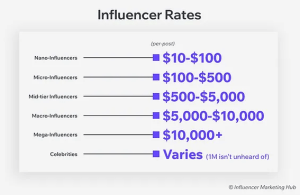
Influencer rates

4. Klear: A platform that provides influencer research and analytics, it allows brands and agencies to identify, engage and measure the impact of influencers on their social media campaigns.

5. Influencer.co: A platform that connects brands with influencers, it provides a range of services such as campaign management, influencer research, and analytics.

Here are a few tips on how to reach out to influencer management companies and capture their attention:

1. Research the company: Before reaching out, take the time to research the company and familiarize yourself with its services, clients, and the types of influencers they work with.

2. Tailor your pitch: When reaching out, tailor your pitch to the specific company and show that you have done your research. Explain why you would be a good fit for their agency and how your skills and experience align with their services and clients.

3. Showcase your portfolio: Include a link to your social media profiles and a portfolio of your work. Make sure your content is high-quality and relevant to the niche you want to work in.

4. Have a solid online presence: Having a strong online presence, such as a website or a blog, will give you an advantage when reaching out to companies.

5. Network: Networking is a great way to meet people in the industry and get your name out there. Attend events, and conferences and participate in online groups that are related to your niche, this will give you the opportunity to meet people who might be interested in working with you.

6. Be professional: When reaching out to companies, make sure to be professional and polite in your communication. Follow up with them if they don’t respond, but be respectful of their time and don’t be overly persistent.

Remember that building a relationship with these companies takes time and effort, but with patience, persistence, and a solid strategy, you can turn your passion into a successful career.

Bonus tip: Here are a few examples of conferences that an aspiring influencer can attend to gain exposure and network with industry professionals:

1. Influencer Marketing Show: This conference, held in London and New York, brings together influencer marketing experts, brands, and agencies to discuss the latest trends and strategies in the industry.

2. BlogHer: This annual conference is one of the largest events for women bloggers, influencers, and content creators, it provides a platform for attendees to learn about the latest strategies, connect with other bloggers and brands, and gain exposure for their work.

3. VidCon: This annual conference is focused on the online video industry, it brings together creators, brands, and industry professionals to discuss the latest trends and strategies in the world of online video.

4. SXSW: South by Southwest (SXSW) is a set of film, interactive, and music festivals and conferences that take place every spring in Austin, Texas, USA. It’s a great platform for creators, influencers, and industry professionals to connect, learn and showcase their work.

5. Social Media Marketing World: This annual conference is focused on social media marketing, it brings together industry experts, brands, and influencers to discuss the latest trends and strategies in the world of social media.

6. Digiday Content Marketing Summit: This conference brings together publishers, brands, and agencies to discuss the latest trends and strategies in content marketing, it’s a great platform to learn about the industry and network with other professionals.

In summary, by following these tips and advice, you can increase your chances of capturing the attention and grow your specific Social Media account and ultimately become a Social Media influencer superstar!

How to Acquire Financial Services Leads using Social Media & Tips to Help you Stay Compliant

Social media is a powerful tool for acquiring financial service leads. With billions of users on platforms such as Facebook, Instagram, LinkedIn, and Twitter, it’s no wonder that businesses are turning to social media to reach potential customers. In this blog post, we’ll explore some of the best ways to acquire financial services leads using social media.

  1. Create a strong presence on social media

Before you can start acquiring leads on social media, it’s essential to establish a strong presence on the platforms you plan to use. This means creating a professional profile, posting high-quality content, and interacting with your followers. By creating a strong presence, you’ll be more likely to attract potential leads who are interested in your financial services.

  1. Use targeted ads

One of the most effective ways to acquire leads on social media is through targeted ads. By targeting specific demographics, locations, and interests, you can ensure that your ads are being seen by the people most likely to be interested in your financial services. For example, if you offer mortgage services, you could target ads to homeowners in a certain location.

  1. Utilize social media groups and communities

Another way to acquire financial services leads on social media is by joining groups and communities related to your industry. By participating in these groups and communities, you can connect with potential leads looking for financial advice or services. Just be sure to follow any group rules and guidelines and be respectful of other members.

  1. Share valuable content

Sharing valuable content on social media is a great way to attract leads. This could be industry news, tips, and tricks, or educational resources. By consistently sharing high-quality content, you’ll position yourself as a thought leader in your industry and build trust with potential leads.

  1. Use social media to answer questions and offer advice

Social media is a great place for people to ask questions and seek advice. By actively participating in these conversations and offering helpful information, you can establish yourself as an expert in your field and attract leads. Just be sure to follow any guidelines and policies set by the social media platform and always provide accurate and helpful information.

Social media is a powerful tool for acquiring financial services leads. By creating a strong presence, using targeted ads, participating in groups and communities, sharing valuable content, answering questions, and offering advice, you can attract potential leads and grow your business.

Also, as a financial advisor, it’s important to adhere to all regulatory requirements, including those related to social media (FINRA & SEC). Here are some tips to help you stay compliant when using social media as a financial advisor:

  1. Understand the rules: The Securities and Exchange Commission (SEC) and FINRA has specific rules (Guidance) that apply to financial advisors using social media. It’s important to familiarize yourself with these rules to ensure that you’re not breaking any regulations. Some key things to keep in mind include:
  • Disclosing any material conflicts of interest
  • Not making false or misleading statements
  • Not using social media to advertise your services without providing the required disclosures
  • Retaining all relevant communications and records for a specified period of time
  1. Use caution when posting: Be careful about what you post on social media as a financial advisor. Even if you’re not intentionally trying to break the rules, it’s easy to accidentally make a statement that could be perceived as misleading or inappropriate.
  2. Keep it professional: Social media is a public forum, so it’s important to maintain a professional image. Avoid posting personal or inappropriate content, and always be respectful and courteous in your interactions with others.
  3. Disclose your relationship: If you’re posting about a specific investment or product, be sure to disclose your relationship to that product or investment. This could include disclosing whether you own the product or are being compensated for promoting it.
  4. Use proper disclaimers: If you’re posting content that could be perceived as investment advice, be sure to include appropriate disclaimers. This could include a statement that the content is for informational purposes only and does not constitute investment advice.

By following these tips, you can help ensure that you’re staying SEC & FINRA-compliant on social media as a financial advisor. Remember, it’s always better to err on the side of caution when it comes to regulatory compliance.

Generating Leads from Social Media

If you’re a business owner or marketer, you know how important it is to generate leads from your social media efforts. Social media platforms like Facebook, Instagram, and LinkedIn are great for building brand awareness and engaging with potential customers, but ultimately, the goal is to convert those followers into leads. In this blog post, we’ll provide some tips on how to do just that.

First and foremost, it’s important to understand who your target audience is and what kind of content they respond to. This will help you create more effective social media posts and campaigns that will resonate with your audience and encourage them to take action.

Once you have a good understanding of your target audience, you can start creating content that is specifically designed to convert leads. Here are some things to keep in mind:

  • Offer value: One of the key ways to convert leads on social media is to provide value to your followers. This can mean sharing useful information, offering discounts or promotions, or providing helpful resources. Whatever it is, make sure that it’s something that your audience will find valuable.
  • Use calls to action (CTAs): A call to action is a phrase or button that tells your audience what to do next. This could be something like “click here to learn more” or “sign up for our newsletter.” By including a clear CTA in your social media posts, you’re making it easy for your audience to take the next step and become a lead.
  • Utilize lead magnets: A lead magnet is a free resource that you offer in exchange for a potential customer’s contact information. This could be something like an e-book, a checklist, or a free trial. By offering a lead magnet, you’re providing value to your audience and giving them the incentive to provide their contact information.
  • Follow-up: Once you’ve generated a lead from social media, it’s important to follow up and continue the conversation. This could be through email marketing, direct messages, or even a phone call. The key is to continue providing value and building a relationship with the potential customer.

By implementing these tips, you can effectively convert leads from your social media efforts. Remember to always focus on providing value to your audience and making it easy for them to take the next step. With a little bit of effort, you can turn your social media followers into loyal customers.


Social Media Marketing Is More Than Just Posting Once In A While…

Social Media marketing is more than just posting once in a while…Don’t let your Facebook, Twitter or Instagram gather cobwebs, you need to “show up” day after day with fresh content. Instead of spreading yourself thin across 5 different sites, focus on 2-3 primary accounts. Incorporating social scheduling and automation saves time and energy.

Picking and Prioritizing your Social Media Platforms

Don’t let your Facebook, Twitter, LinkedIn or Instagram gather cobwebs, you need to “show up” day after day with fresh content. Instead of spreading yourself thin across 5 different sites, focus on 1-2 primary accounts.

Incorporating social scheduling and automation saves time and energy. Picking and prioritizing your social platforms based on your audience location. Repurpose content so your not always trying to “reinvent the wheel.” Build your presence and following on those accounts as much as possible. If you don’t have Fortune 500 type social media resources, just pick and focus on 1 platform.

Once you get the hang of it (content creation, social scheduling) branch out and add another platform. You can always outsource the work to a freelancer. When you outsource anything, one of the greatest outcomes is gaining expertise that isn’t currently available to you. This is especially true when you’re considering outsourcing social media marketing & management.

Content Posts: Facebook vs Instagram vs Twitter vs LinkedIn

Don’t post the same EXACT content or same post on each platform. The platform and the audience using each, are unique and as such require a unique post. Where does your business fit into all this? The main key to knowing which social media platform is right for your business is firstly knowing exactly who your target demographic audience is.

If you post the same content on each platform, you run the risk of customers “unfollowing” you on one if not all of your platforms. Customers (or audience) will grow tired of the duplicate posts/content. Posts can be similar, but not exactly the same. Facebook is the most popular social network among middle-aged adults. Instagram is mostly accessed via mobile and is more heavily-used by affluent youth. A majority of Instagram users are under 30, and many are in their teens. Instagram users are primarily looking at images and/or videos as posts or as Instagram Stories. Twitter has become a conduit for news, particularly with users between 18 and 29. Twitter provides a way for users to follow real-time news feeds. Popular with celebrities, politicians, journalists and news outlets, it is also well-liked by businesses in the tech sector. LinkedIn is a professional network that was initially created as a corporate recruitment platform. Now, it boasts many features similar to traditional social media sites, including status updates, blogging capabilities, and private messages. LinkedIn is better for lead generation.

Your content type will depend upon which Social Media platform your business will utilize.

Post More…Social Media Content!

Social Media marketing is more than just posting once in a while…

Don’t let your Facebook, Twitter or Instagram gather cobwebs, you need to “show up” day after day with fresh content. Instead of spreading yourself thin across 5 different sites, focus on 2-3 primary accounts. Incorporating social scheduling and automation saves time and energy. Picking and prioritizing your social networks based on your audience location. Repurpose content so your not always trying to reinvent the wheel. Build your presence and following on those accounts as much as possible.

Even some larger companies with dedicated social media teams are only active on 3 social networks at the most, so don’t feel obligated to be on every site possible. Consistency trumps quantity. Everything you upload on social media has to have a solid strategy behind it. Don’t just post twice a day because you think you should. Have a reason for hitting ‘enter’.

Social Media Sales in 2022

image

Forward-thinking salespeople are embracing a more “social” approach to break down old communication barriers such as Cold Calls, and Email = Social Media. Social selling allows salespeople to laser-target prospects, establish rapport and with their networks, and possibly even ditch the dreaded practice of cold calling.

While determining the best way to connect with prospects and help coax a consumer down your sales funnel, buyers are consistently going to social networks and the Internet to research products they have an interest in purchasing. Whether you are a B2B or B2C brand, potential buyers are looking on these social media platforms for product information. As smartphones are getting bigger form factors and faster processors, consumers are apt to looking, researching with these larger handheld mobile screens.

Here is a brief breakdown of Social Media as related to the Enterprise:

Business to Consumer = Facebook

Business-to-Business products (or services) = LinkedIn (if you have a first-level connection in common with the executive or buyer who will sign off on a PO)

All types of sales = Twitter

*Twitter is the best for “all kinds of sales” as it’s a very popular network (across all demographics) that doesn’t have privacy settings that keep you from high volume searches and actions.

Social Media Sales strategies

Twitter. Make sure you “add” to the conversation a little before directly engaging in customers:

  1.     Like (heart) a few Tweets
  2.     ReTweet one or two Tweets
  3.     Follow them

Friend, Follow, Follow Back or Connect with individuals with profiles that match you or your clients. Its VERY Important to build relationships on any Social Media platform. Not only can it help to generate leads, it can also help foster relationships with current customers.

Be in expert in your space. Provide solutions or tips and feedback to your customers or potential customers if they post a question or gripe on Twitter/Facebook. Prioritize the social channels and tools your audience is already using and that you’re familiar with, then organize those by their primary function.

Listening on social media is one of the most powerful tactics in a social selling strategy. Monitor for popular hashtags and keywords that are relevant to your industry or brand to find useful insights but also see what is being said about your competitors.

Never cold pitch on Social Media platforms. It comes off as desperate and will be ignored. If there is a conversation trending within your industry and potential customers, join in to offer meaningful commentary and interact with these potential buyers. Listening for these opportunities and finding out the pain points your potential customers are having will give sales people a feel for the conversation and allow them to add value.

Social media is “networking” more than it is “advertising”. The goal is to get them to call you (or vice versa), have an open mind about your product or service, and then make your sales pitch.

When its time to engage or pitch, follow these steps:

  • Ask for their email so that you can send them some info on your services.
  • Find them on LinkedIn and add “connect” with them.
  • Send a polite email and mention a conversation you had with them on Twitter or Facebook. You can also mention a tweet or Post that you “favorite” or “liked” from them.

Good Social Sales tools in this space that keeps track of conversations and engagement include:

Hootsuite. More for individuals and small business.

Salesforce Marketing Cloud. Enterprise grade and scalable.

Its apparent that Social Media like Facebook, Twitter, and LinkedIn are not fads anymore. These platforms are now mature options to generate leads and sales online. By experimenting with different Social Media sales strategies, you can find the best way to convert them into real quantifiable results on all levels. There are no participation medals in social selling: if you’re going to do it, you have to do it right. That means providing valuable insight to the right prospects at the right time.